How to Choose a Builder in Dublin: 10 Essential Tips
Choosing the right builder for your Dublin home project is one of the most important decisions you'll make. A qualified, reliable builder can transform your vision into reality on time and on budget. Choose poorly, and you risk cost overruns, poor workmanship, and frustration. With over 35 years of building experience in Ballinteer and South Dublin, BR Building Services has seen both the best and worst contractor practices. This guide gives you the essential knowledge to select a builder you can trust.
Whether you're planning an extension, renovation, or new build in Dublin, these 10 essential tips will help you avoid costly mistakes and partner with a professional who delivers quality results.
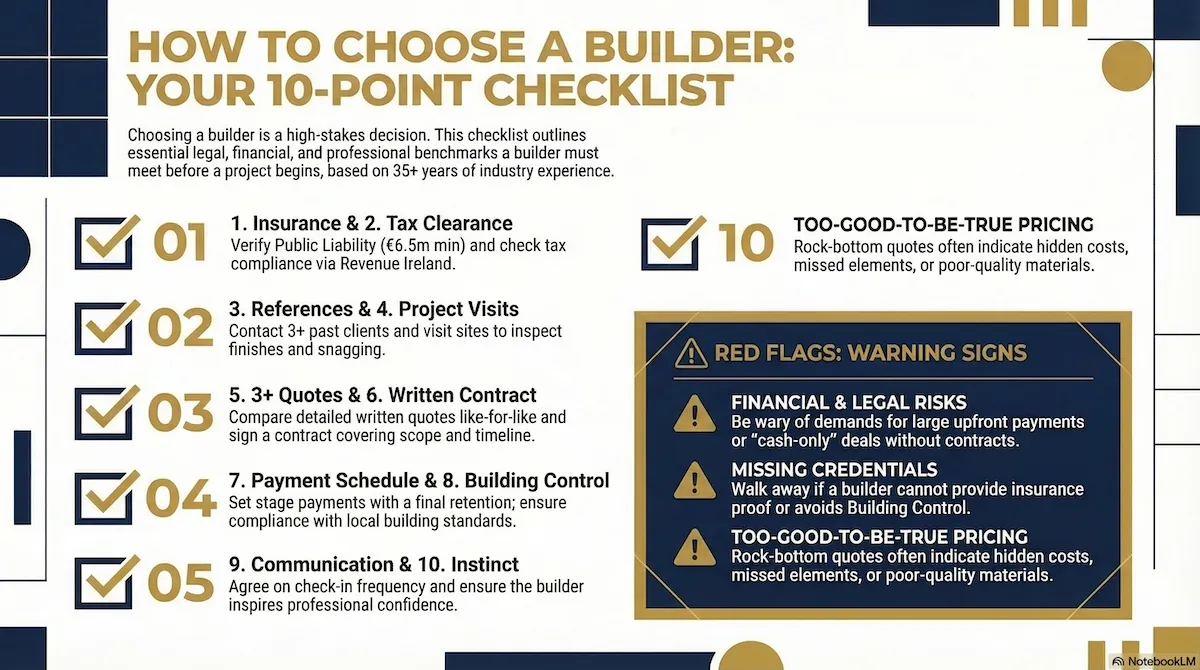
1. Check Insurance and Tax Compliance
Before any other consideration, verify that your builder has current public liability insurance and employer liability insurance (if they employ staff). Public liability insurance protects you if the builder damages your property or a third party gets injured on site. Minimum cover should be €6.5 million.
Ask for a copy of the insurance certificate and verify it's valid for the duration of your project. Also confirm the builder is registered with the Revenue Commissioners and compliant with tax obligations. You can verify tax clearance status on the Revenue Ireland website, which is essential to protect yourself from liability issues.
Why This Matters
A builder without proper insurance exposes you to significant financial and legal risk. If someone is injured on site or property is damaged, you could be held liable. Tax non-compliance suggests poor business practices and instability.
2. Ask for References and Visit Past Projects
References are everything. Ask your potential builder for at least three to five recent references from clients who had similar work done. Don't just call them; visit their completed projects in person if possible. Look at the quality of finishes, check for snags or poor workmanship, and ask the homeowner about their experience working with the builder.
Pay particular attention to:
- Whether the project finished on schedule
- If costs remained within the quoted range
- The builder's response to problems that arose
- Overall satisfaction and whether they'd hire them again
- How the builder managed site cleanliness and neighbour relations
Be wary of builders who are reluctant to provide references or give excuses about why they can't. A builder with quality work has nothing to hide.
3. Get at Least 3 Detailed Written Quotes
Never hire a builder based on a single estimate. Get at least three detailed written quotes from reputable builders. The quotes should break down costs by section: materials, labour, fixtures, finishes, and contingency. Avoid verbal estimates or vague quotes that lack detail.
Compare like-for-like specifications across quotes. A quote that's significantly lower than others often indicates the builder has missed elements, used cheaper materials, or is undercutting to win work (and may cut corners). Similarly, prices that are unusually high may suggest inefficiency or hidden markups.
The lowest price is not always the best value. A mid-range quote from a builder with strong references and clear communication often delivers better outcomes than a rock-bottom bid from an unknown contractor.
4. Check CIF/CRO Registration
Verify your builder is registered with the Companies Registration Office (CRO) if they operate as a limited company, or check they're registered as a sole trader or partnership with the appropriate authorities. You can search the CRO online to confirm company details, directors, and filing history.
Registration demonstrates legitimacy and accountability. It also gives you recourse if disputes arise; you can trace the company and verify ownership. Unregistered operators, particularly "cash-only" builders, are major red flags.
5. Agree on a Detailed Contract
Never start work without a signed contract. The contract should include:
- Scope of Work: Detailed description of every element of the project
- Materials and Specifications: Exact brands and grades of materials
- Timeline: Start date, key milestones, and completion date (with realistic buffer)
- Total Cost: Fixed price or a clear breakdown of costs
- Payment Schedule: When payments are due (see Tip #6)
- Defects and Warranty: Builder's responsibility for rectification and warranty period
- Dispute Resolution: How disagreements will be handled
- Insurance and Liability: Confirmation of coverage
- Building Regulations and Planning: Who is responsible for applications and compliance
If you're unsure about contract terms, consider having a solicitor review it. The cost (typically €300-€500) is worthwhile protection for a project worth tens of thousands of euros.
6. Understand the Payment Schedule (Never Pay All Upfront)
A common scam is a builder demanding full or majority payment upfront, then disappearing mid-project or delivering poor work. Never agree to this. Standard payment schedules follow these stages:
| Payment Stage | Timing | Typical % |
|---|---|---|
| Initial Deposit | Upon contract signing | 10-20% |
| Stage Payments | Upon completion of key phases (foundation, structure, roof, etc.) | 20-30% each |
| Practical Completion | When construction is substantially finished | 10-15% |
| Final Payment | After defects rectified and all snagging complete | 5-10% |
Hold back a final retention amount (typically 5-10%) until all work is satisfactory. This motivates the builder to complete defects quickly. Never release final payment until you're completely satisfied.
7. Check They Have Public Liability Insurance
This overlaps with Tip #1, but it's so critical it deserves emphasis. Public liability insurance is non-negotiable. It protects both you and the builder if things go wrong on site. Request a current certificate of insurance and verify the coverage amount is adequate for your project scope.
If the builder says they "can't provide insurance" or don't have it, walk away. This is a fundamental professional standard, not optional.
8. Verify They'll Handle Building Control Requirements
Most building work in Dublin requires Building Control approval. Some builders try to avoid this to cut costs, but it's illegal and dangerous. Confirm your builder:
- Understands Building Control requirements for your specific project
- Will arrange registration and inspections
- Has experience with local Dublin building standards
- Can explain which exemptions apply (if any)
Your builder should also be familiar with planning permission requirements and whether your project needs planning approval. Many extensions under 40 m² are exempt, but not all.
A builder who tries to avoid Building Control or suggests working "under the radar" is a major red flag. You'll have problems when selling the property, and you have no legal protection if things go wrong.
9. Establish Clear Communication Channels
Agree upfront on how and when you'll communicate. Will you have weekly site meetings? Daily check-ins via phone or email? Who is your main point of contact? What's the process for raising concerns or change requests?
Good communication prevents misunderstandings and catches problems early. A builder who is responsive, proactive in updates, and welcomes your input is typically one who takes pride in their work.
Also discuss site access and working hours. Will they need access to certain rooms daily? What times will they work? How will neighbours be affected? Clear agreement here prevents friction.
10. Trust Your Instincts
Finally, trust your gut feeling about the builder. After checking credentials, references, and insurance, does this person inspire confidence? Are they professional, courteous, and thorough in their communication? Do they listen to your requirements and offer sensible suggestions?
A builder who is impatient, evasive, unprofessional, or dismissive of your concerns is likely to be difficult to work with throughout the project. You'll be living with the stress of the build for months; choose someone you can communicate with and trust.
Quick Tip
If a builder pressures you for a quick decision, demands large upfront payments, or won't provide basic information like insurance or references, move on. Reputable builders don't need high-pressure tactics to secure work.
Builder Selection Checklist
Use this checklist to evaluate and compare your potential builders:
| Criteria | Builder A | Builder B | Builder C |
|---|---|---|---|
| Public Liability Insurance (verified) | ☐ | ☐ | ☐ |
| Tax Clearance/Compliance (verified) | ☐ | ☐ | ☐ |
| 3+ Recent References Provided | ☐ | ☐ | ☐ |
| References Checked (Called/Visited) | ☐ | ☐ | ☐ |
| CRO/Company Registration Verified | ☐ | ☐ | ☐ |
| Detailed Written Quote Provided | ☐ | ☐ | ☐ |
| Professional Contract Offered | ☐ | ☐ | ☐ |
| Understands Building Control/Planning | ☐ | ☐ | ☐ |
| Communication Process Agreed | ☐ | ☐ | ☐ |
| Professional & Trustworthy | ☐ | ☐ | ☐ |
Final Thoughts
Choosing a builder is a major decision. Taking time upfront to verify credentials, check references, and understand terms saves stress, money, and heartache later. The right builder is a partner who communicates clearly, delivers quality work, and stands behind their commitment.
With 35+ years of building in Dublin, BR Building Services has earned our reputation through reliable, professional project delivery. If you're in the market for a builder, we're happy to discuss your project and provide a detailed quote based on your specific requirements.