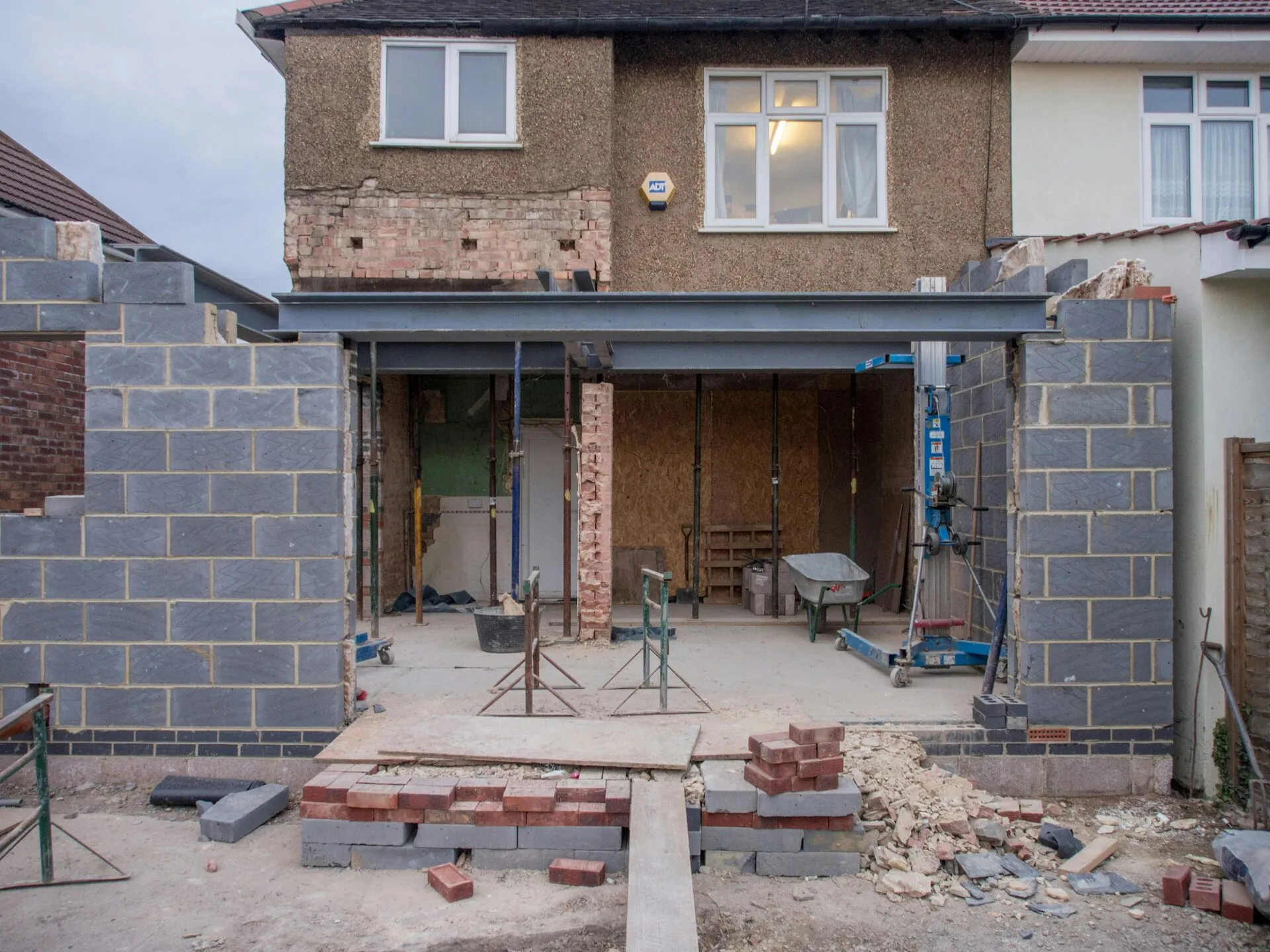
Exempt Development Rules in Dublin: What You Can Build Without Planning Permission

One of the most common questions homeowners ask is: "Do I need planning permission for my extension?" The answer, fortunately, isn't always yes. Under Irish planning law, certain types of development are exempt development – meaning you can build them without obtaining formal planning permission. Understanding exempt development rules Dublin can save you thousands of euros in application fees and expedite your project by months. However, the rules are nuanced, and many homeowners unknowingly breach exemptions by not meeting specific conditions. With 35+ years of building experience in Ballinteer and Dublin 16, BR Building Services helps you navigate these rules accurately.
This comprehensive guide covers what qualifies as exempt development, the precise limits and restrictions, when exemptions don't apply, and the common mistakes that can cost you dearly.
What Is Exempt Development?
Exempt development refers to certain categories of building work that are permitted under Part 4 of the Planning and Development Regulations 2001 (as amended) without requiring formal planning permission from your local authority. The rationale is straightforward: these developments are considered minor in scale and impact, so streamlining the process reduces bureaucracy and allows homeowners and businesses to improve their properties more quickly.
However, exemption requires strict compliance with prescribed limits and conditions. A single breach – whether it's exceeding a size limit by just 0.5 m² or building closer to a boundary than allowed – removes the exemption entirely, and you'll need retrospective planning permission (which is expensive and often refuses).
Critical Point
Exempt development is not "do what you want without permission." It's a prescribed set of permissions with specific dimensional, locational, and structural constraints. You must comply with Building Control regulations and local authority conditions even when planning permission is not required.
Exempt Development Rules for House Extensions
House extensions are the most common exempt development category. Dublin's rules are defined under Schedule 2, Part 4 of the Planning and Development Regulations 2001.
Single-Storey Rear Extensions
The most homeowner-friendly exemption. You can build a single-storey extension to the rear of your house without planning permission if it meets these criteria:
- Maximum size: 40 m² of floor area (this includes the full footprint of the extension)
- Height: Must not exceed 4 metres to the roof eaves
- Roof line: Must not project above the level of the existing roof (if extending a single-storey house) or match existing wall height (if extending a two-storey house)
- Distance from boundary: Rear extension must not project beyond the rear wall of the house on either side by more than 40% of the depth of the house, measured from the rear wall (unless the house is detached or on a corner plot)
- No side extension: Extension must be to the rear only; side extensions are treated differently
Two-Storey or Storey-and-a-Half Extensions
These are significantly more restricted. A two-storey extension to the rear is exempt only if:
- Total floor area: Not exceeding 40 m² (combined ground and first floor)
- Height constraint: Must not exceed the height of the existing building
- Setback requirement: The upper storey must be set back from the rear wall by at least 1 metre, or from the side boundaries by at least 1 metre to reduce visual bulk
- Roof condition: If the existing building has a pitched roof, the extension roof must match the pitch and height
Two-storey extensions are far more challenging to exempt. In practice, most homeowners seeking two-storey additions in Dublin apply for planning permission to avoid the risk of exceeding dimensional constraints.
Side Extensions
Side extensions have stricter rules than rear extensions. An exempt side extension must:
- Not exceed 40 m² per side (if extending both sides, each must be under 40 m²; total cannot exceed 80 m²)
- Match the eaves and ridge height of the existing building
- Maintain boundary setbacks: For semi-detached and terraced houses, side extensions to the far side must maintain the distance from the original dwelling's boundary wall (typically 1 metre for party walls)
- Match the roof pitch and materials of the main building
Garden Rooms and Detached Structures
Garden rooms, sheds, summer houses, and detached garages can be exempt development if they meet strict limits:
- Maximum floor area: 25 m² per detached structure
- Height: Not exceeding 4 metres to eaves or 5 metres to ridge for a pitched roof
- Position: Must be located to the rear of the main building (not in front)
- Materials: Cannot be used for habitation (so a garden room with a kitchen and bathroom may be exempt, but if it's designed as a guest bedroom, it's not exempt)
- Distance from house: Must maintain at least 1 metre from any existing building
A popular option for Dublin homeowners is a 25 m² garden room or studio. These are excellent for home offices, hobby spaces, or rental studios – as long as they're not classified as independent residential units.
Garage Conversions and Replacements
Converting an existing garage to living space, or replacing a garage with a new one, can be exempt development:
- Conversion to habitable space: Converting an existing garage to a kitchen, bedroom, utility, or office is exempt development (no size limit, as you're not adding new floor area)
- Replacement garage: If you demolish and rebuild a garage, the new structure must not exceed the footprint of the original by more than 25 m²
- New garage: A new detached garage is exempt if it meets detached structure rules (25 m², rear location, height limits)
Garage conversions are a cost-effective way to add living space without planning applications. However, you must maintain Building Control compliance, including insulation, ventilation, and egress standards.
Exempt Development Categories – Summary Table
| Development Type | Maximum Size | Key Restrictions | Exemption Status |
|---|---|---|---|
| Single-Storey Rear Extension | 40 m² | Height 4m, depth 40% rule, rear only | Exempt |
| Two-Storey Rear Extension | 40 m² total | 1m setback, height matching, complex | Exempt (restrictive) |
| Side Extension | 40 m² per side | Match height/pitch, boundary rules | Exempt |
| Garden Room / Shed | 25 m² | Rear location, 4m height, non-habitable | Exempt |
| Garage Conversion | Existing footprint | Building Control compliance required | Exempt |
| Replacement Garage | +25 m² allowance | Maintain structural integrity | Exempt |
| New Detached Garage | 25 m² | Rear location, same height rules | Exempt |
| Internal Renovations | N/A | No external works, structural changes minimal | Exempt |
Internal Renovations and Alterations
Good news: most internal work is exempt development. You can renovate your kitchen, bathroom, or bedroom without planning permission if the work doesn't alter the external building. Exempt internal work includes:
- Replacing windows and doors (internal sides only)
- Rewiring and replumbing
- Reconfiguring room layouts (removing non-structural walls)
- Installing new kitchens, bathrooms, or flooring
- Adding insulation and upgrading HVAC systems
However, certain internal alterations are not exempt:
- Removing load-bearing walls (structural work requires planning and Building Control approval)
- Creating new rooms if it increases the external footprint
- Installing mechanical ventilation that vents externally in ways that violate Building Regulations
When Exempt Development Does Not Apply
Even if your project fits the exempt development categories, exemptions are removed entirely if certain conditions apply to your property:
Listed Buildings
If your house is on the Register of Protected Structures, no external alteration is exempt development. You must apply for planning permission and Architectural Heritage Protection (AHP) approval. This includes seemingly minor changes like replacing windows or rendering.
Properties in Conservation Areas
Residential properties in designated conservation areas have restricted exemptions. Extensions may require planning permission depending on the area's character and the type of works proposed.
Apartment Schemes and Multiple Occupancy
If your property is part of a multi-unit apartment scheme, exemptions for extensions are removed. You need planning permission to modify the external building envelope. This protects the integrity and character of apartment complexes.
Recent Planning Permissions
If you received planning permission for development in the last 7 years that imposed conditions, those conditions may restrict your exempt development rights. For example, a condition might state "no further extensions without permission."
Distance from Roads
Properties within a certain distance of national roads or motorways may have restricted exemptions. Your local authority (Dun Laoghaire-Rathdown, Fingal, or South Dublin County Council) can advise.
Common Mistakes Homeowners Make
Over 35 years, we've seen homeowners lose exempt status through preventable errors:
Exceeding the 40 m² Limit by Miscalculation
The 40 m² is total floor area – including every square metre of the extension. Many homeowners measure internal dimensions and don't account for wall thickness. Building a 41 m² extension means losing exemption and needing retrospective permission.
Ignoring the 40% Depth Rule
For semi-detached houses in Dublin, this rule trips up many. Your extension can't project beyond 40% of your house's rear depth without permission. On a 10-metre deep house, that's just 4 metres max. Exceeding this removes exemption.
Not Checking Listed Building Status
Some older Dublin properties are protected structures and homeowners don't realize. You can check on the South Dublin County Council website or contact your local authority.
Building Too Close to Boundaries
Exemptions require maintaining boundary distances for semi-detached and terraced properties. Building too close to a party wall removes exemption.
Choosing Unsuitable Finishes
Exemptions require that extensions match the character of the existing building in roofing materials, window style, and external finishes. If your extension uses completely different materials (e.g., modern cladding on a traditional cottage), the exemption may be questioned.
Building Control – Still Required for Exempt Development
A critical misunderstanding: exempt development still requires Building Control approval. You must:
- Register the work with your local authority's Building Control department (€200-€500 fee)
- Submit drawings showing compliance with Building Regulations (insulation, fire safety, structural design, electrical safety)
- Allow Building Control inspections at foundation, damp-proof course, and completion stages
- Obtain a Building Completion Certificate upon finish
Failing to register with Building Control is a breach of regulations and can affect house insurance, resale value, and future mortgage refinancing. It's a costly oversight.
Seeking Clarification from Your Local Authority
If you're uncertain whether your project qualifies as exempt development, request a written clarification from your local authority before starting work. Dun Laoghaire-Rathdown, Fingal, and South Dublin County Councils provide this service (usually free or a small fee).
Key resources:
The Value of Expert Advice
With 35+ years building in Ballinteer and Dublin 16, BR Building Services has navigated exempt development rules for hundreds of homeowners. We help you:
- Assess whether your project qualifies as exempt development
- Ensure all dimensional and locational limits are met
- Prepare Building Control drawings and submissions
- Coordinate with your local authority for any necessary clarifications
- Manage the building process to comply with all regulations
The cost of getting exempt development right is far less than the cost of retrospective planning applications or remedial works.