Building an Energy-Efficient Extension in Dublin: What You Need to Know
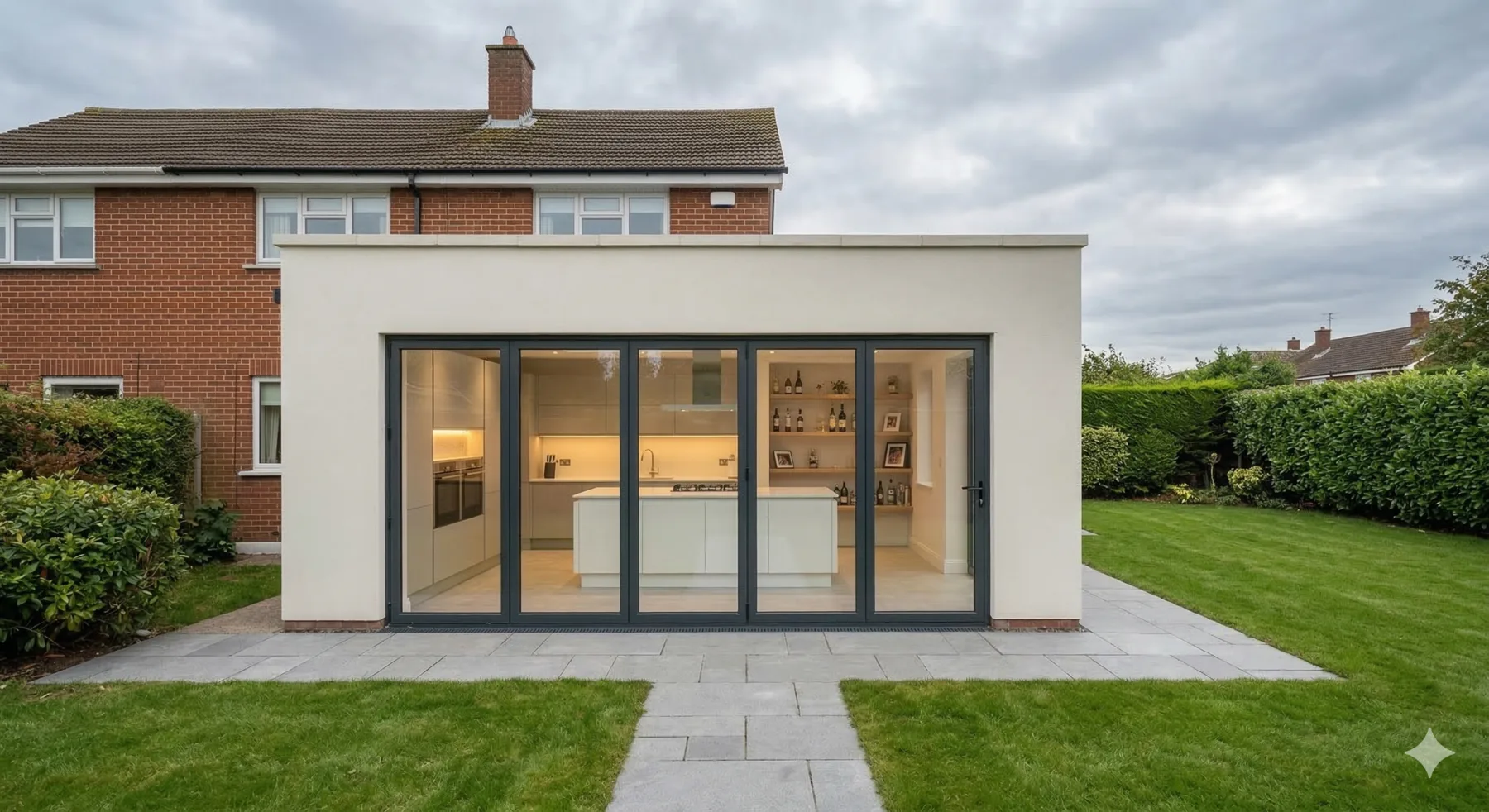
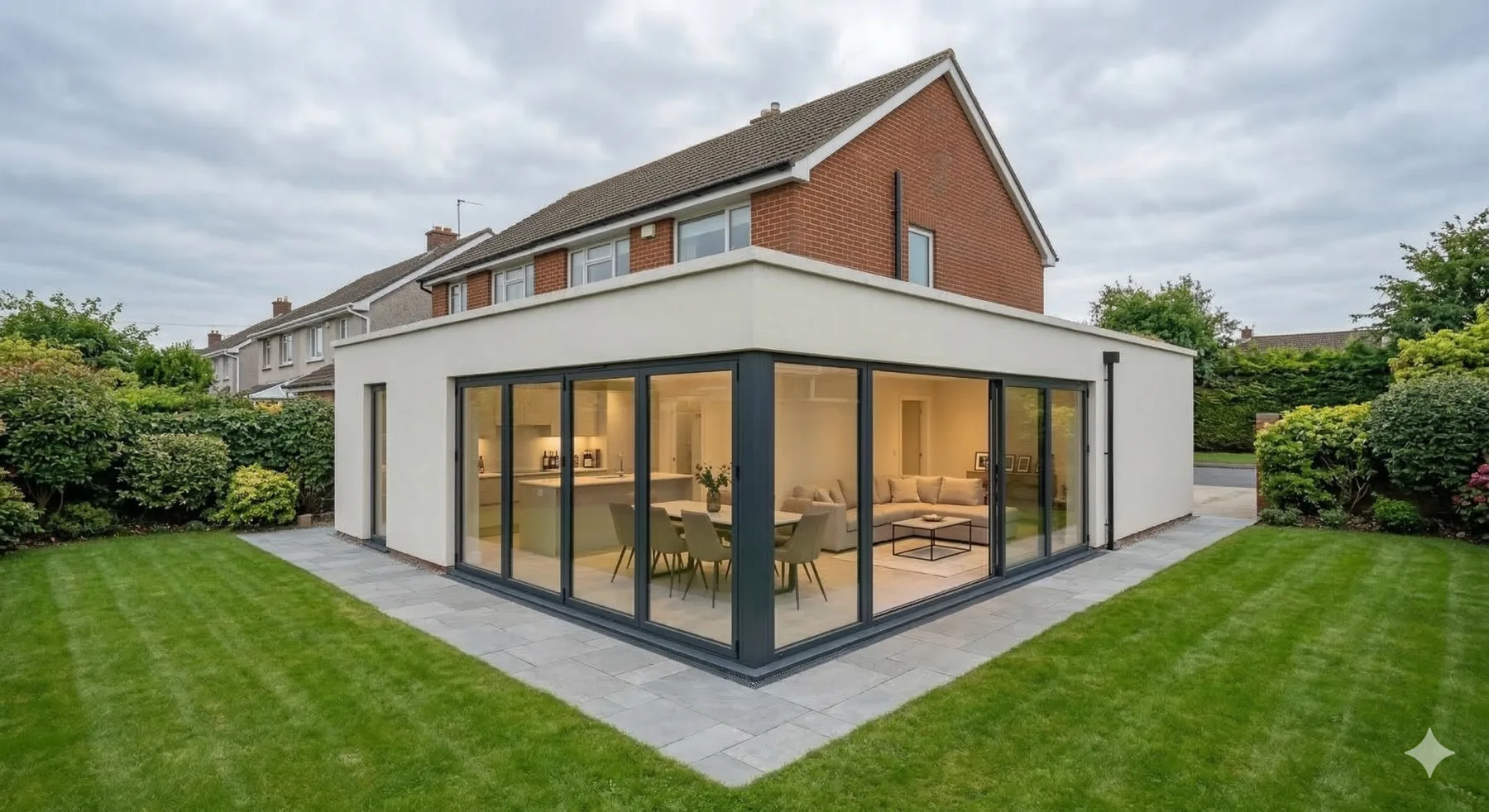
Planning an energy efficient extension Dublin project? You're making a smart investment. Building regulations have tightened significantly, and energy performance is no longer optional—it's mandatory. With over 35 years of building experience in Ballinteer and South Dublin, BR Building Services has designed and built hundreds of extensions to meet strict energy performance standards. Whether your main house is old or new, your extension must comply with current Part L Building Regulations, and doing so intelligently can reduce your energy bills by 30-40% compared to a standard build.
This comprehensive guide covers everything you need to know about energy-efficient extensions in Dublin: building regulations compliance, required U-values, passive solar design, heat pump integration, mechanical ventilation, and future-proofing strategies that protect your investment.
Part L Building Regulations and Your Extension
The first thing to understand: even if your house was built in 1970, your new extension must meet 2024 Part L Building Regulations standards. This is non-negotiable. The regulations require that new extensions achieve a significant improvement in energy performance compared to the building standards that applied when the original house was built.
Part L compliance for extensions requires a detailed energy assessment, typically using software like DEAP (Dwelling Energy Assessment Procedure). Your energy consultant will model the extension's performance, accounting for orientation, glazing area, insulation thickness, ventilation strategy, and heating system integration. The target is to achieve a Building Energy Rating (BER) improvement that demonstrates the extension performs at least as well as a newly built dwelling of similar size.
Key requirements include:
- New walls, roofs, and floors must achieve specified U-values (see table below)
- Windows and doors must meet thermal performance thresholds
- Air tightness testing may be required
- Ventilation must be controlled (no uncontrolled infiltration)
- Heating systems must be efficient (heat pumps or high-efficiency boilers)
- Renewable energy or efficiency measures must be considered
Required U-Values for Dublin Extensions (2026)
U-values measure how quickly heat escapes through a building element. Lower is better. Here are the required maximum U-values for new extensions in Dublin:
| Building Element | Maximum U-Value (W/m²K) | Typical Specification |
|---|---|---|
| External Walls | 0.21 | 150mm mineral wool in cavity + blockwork + plasterboard |
| Roof/Attic | 0.16 | 200-250mm mineral wool between rafters or above joist |
| Ground Floor | 0.21 | 150mm rigid foam + concrete screed over structural slab |
| Windows & Doors | 0.20 | Triple-glazed units (preferred) or high-performance double glazing |
| Thermal Bridging | Minimised | Insulated window frames, thermal breaks in lintels |
Why These U-Values Matter
These are not guidelines—they're mandatory minimums. Achieving them costs 5-10% more than basic Building Regulations compliance (pre-2024). But the payback comes in reduced energy bills: every 0.1 reduction in U-value saves approximately €100-€150 annually in heating costs for a 30 m² extension.
Passive Solar Design and Orientation
The best energy efficiency comes from intelligent design before construction begins. South-facing extensions in the Northern Hemisphere capture free heat from the sun, dramatically reducing heating demand during winter and spring.
Glazing Strategy
For south-facing extensions, maximize window area (35-40% of wall area is ideal). For north-facing aspects, minimize glazing to reduce heat loss. East-facing windows gain morning sun (beneficial), while west-facing units can overheat in summer. Use triple-glazed low-emissivity (low-E) coatings to capture solar gains while preventing re-radiation at night.
Thermal Mass Benefits
Extensions with concrete or brick internal surfaces absorb solar heat during the day and release it at night, naturally moderating temperature swings. This is particularly effective with underfloor heating, which distributes stored heat slowly and evenly. A 100 mm concrete screed floor with good solar access can reduce heating demand by 10-15%.
Overhang and Shading
Roof overhangs prevent summer sun from overheating south-facing glass while allowing winter sun (lower angle) to penetrate. A 600-800 mm overhang provides effective summer shading without blocking winter gains. Motorized blinds or external shutters offer additional control in Dublin's variable climate.
Underfloor Heating in New Extensions
Underfloor heating (UFH) is one of the highest-ROI additions to an energy-efficient extension. Unlike radiators, UFH operates efficiently at lower water temperatures (30-35°C vs. 60-70°C for traditional systems), which is ideal for heat pump integration. Benefits include:
- Reduced energy consumption (15-25% vs. radiator heating)
- Superior comfort (even warmth distribution, no cold spots)
- Aesthetic advantage (no radiators in new spaces)
- Perfect compatibility with heat pumps and solar thermal systems
- Additional cost: €50-€80 per m² for materials and installation
For extensions connecting to an existing boiler, UFH adds cost but improves overall system efficiency. For new heat pump installations, UFH is near-essential for optimal performance.
Heat Pump Ready Extensions
Air source heat pumps are becoming the standard heating solution in Dublin extensions. Modern heat pumps achieve 3-4 kW of heat output for every 1 kW of electricity input (a Coefficient of Performance of 3:1 to 4:1), making them far more efficient than electric or fossil fuel heating.
To maximize heat pump performance, your extension must include:
- Superior insulation (as outlined above)—heat pumps struggle with poorly insulated buildings
- Low-temperature heat distribution—underfloor heating or large radiators
- Good air quality—MVHR systems (see below) coordinate with heat pump operation
- Adequate electrical capacity—heat pumps require 40A or more; check your existing supply
- Outdoor space for the unit—a 1.5m × 0.8m area with good airflow, ideally screened from view
The combination of a heat pump with high-performance insulation, UFH, and MVHR creates a highly efficient extension that costs less to operate than a traditional radiator system, even if upfront costs are higher.
Mechanical Ventilation with Heat Recovery (MVHR)
You cannot have high-performance insulation without controlled ventilation. Modern energy-efficient extensions are so airtight that natural infiltration (windows, cracks) cannot provide adequate fresh air. This is where Mechanical Ventilation with Heat Recovery (MVHR) comes in.
MVHR systems continuously extract stale air from bathrooms and kitchens while supplying fresh outdoor air to living spaces. A heat exchanger core captures 75-90% of the heat from extracted air and transfers it to the incoming fresh air. In Dublin's climate, this heat recovery cuts ventilation losses by 80%.
Benefits of MVHR
- Dramatically reduced energy loss—ventilation accounts for 20-25% of heat loss in conventional homes; MVHR cuts this by 80%
- Improved indoor air quality—continuous filtered fresh air supply (allergen and particulate removal available)
- Humidity control—prevents condensation, mould, and moisture problems
- Quieter than opening windows—no external noise intrusion
- Works seamlessly with heat pumps—coordinated with heating/cooling delivery
MVHR Installation Costs
A central MVHR system for a 30 m² extension typically costs €3,500-€5,500 including ducting, installation, and controls. This is 7-10% of total extension cost, but the energy savings typically repay this investment within 5-7 years.
Critical MVHR Detail
MVHR ducting must be planned during the design phase. Retrofitting MVHR to an existing extension is much more expensive and disruptive. If you're building an extension without immediate MVHR installation, ensure conduits are built into the ceiling/walls for future addition.
Airtightness and Thermal Bridge Reduction
Excellent insulation is undermined if air leaks around the building envelope. Modern extensions should achieve an air leakage rate below 3 m³/(h·m²) at 50 Pa pressure (tested via blower door test). This requires:
- Airtight membranes on internal surfaces, taped and sealed at all penetrations
- Careful detail design at junctions between extension and existing house
- Insulated lintels above windows/doors to prevent thermal bridges
- Sealed penetrations for pipes, ducts, and electrical conduit
- Quality window installation with closed-cell foam sealant and airtight gaskets
Blower door testing (€400-€600) is highly recommended to verify airtightness and identify leaks before completion.
Triple Glazing vs. High-Performance Double Glazing
Triple glazing with low-E coatings achieves U-values of 0.13-0.16 W/m²K, compared to 0.20 for high-performance double glazing. The choice depends on budget and orientation:
- South-facing windows: High-performance double glazing is often sufficient; triple glazing may reduce valuable solar gain
- North-facing or exposed areas: Triple glazing delivers maximum heat retention
- Overall recommendation: Mix both—triple glazing for north/west/east, high-performance double for south-facing to balance efficiency and passive solar gain
Triple glazing costs 25-35% more than double glazing, but in Dublin's windy climate, the heat loss reduction justifies the expense, especially for larger window areas.
Roof Insulation Options for Extensions
Roof insulation is critical because heat rises and escapes through poorly insulated roofs. Three main approaches:
Between Rafters (Warm Roof)
200-250 mm mineral wool or rigid foam between rafters, with an airtight membrane on the warm side. This is the standard for pitched roofs and allows attic/loft space to be used. Cost: €40-€60/m².
Above Rafters (Cold Roof)
Rigid foam boards placed above the rafter structure, below the roof covering. Excellent thermal performance and avoids condensation issues, but reduces attic height. Cost: €60-€90/m².
Flat Roof (Most Common for Extensions)
100-150 mm rigid foam (PIR or XPS) above the structural deck, with a waterproof membrane. Modern flat roof extensions achieve excellent U-values (0.15-0.18) with minimal height penalty. Cost: €80-€120/m².
Flat Roof Pro Tip
Modern warm-roof flat roof construction (insulation above the structure) is now standard and eliminates condensation risk. Avoid cold roofs and ventilated cavity designs in new extensions—they're outdated and problematic.
Connecting Old House to New Extension: Avoiding Thermal Bridges
The junction between your existing house and new extension is critical. Thermal bridges at this interface can negate extension insulation benefits. Key strategies:
- Remove external wall below roof line when connecting, and insulate the gap created (expensive but essential)
- Insulated lintels and junctions at all connection points
- Continuous airtight membrane from extension through to existing structure
- Thermal imaging after construction to verify no cold spots exist
Poor junction detailing can waste 15-20% of the extension's thermal efficiency. Professional energy modelling during design catches these issues early.
Future-Proofing Your Extension
Building an extension today should accommodate tomorrow's technology and changing regulations. Smart additions cost little now but prevent expensive retrofitting later:
- Conduits for solar PV—install empty ducts from roof to electrical switchboard (€300-€500). Adding panels later requires only cable pulling, not structural work
- EV charger-ready wiring—run heavy-gauge cabling to a future EV charger location in garage/driveway (€400-€600). Dublin sees rising EV adoption; this future-proofs resale value
- MVHR ducting (even if not installing immediately)—future retrofit costs triple or more
- Heat pump-ready electrical capacity—upgrade distribution board and install adequate 40A+ circuits before extension is sealed
- Water service preparation—stub plumbing for potential heat recovery ventilation or solar thermal collectors
Total future-proofing cost: €1,200-€1,800, typically 2-3% of extension budget. This investment avoids €5,000-€10,000 in disruption and cost when retrofitting these systems.
LED Lighting Design
Lighting efficiency is often overlooked in extensions but impacts running costs. LED luminaires use 75-80% less energy than incandescent bulbs and last 25,000-50,000 hours. For extensions, specify:
- LED-ready light fittings with appropriate lumen output
- Daylight harvesting sensors (dims lights when natural light is sufficient)
- Occupancy sensors in utility areas (bathrooms, storage) to prevent wasted operation
- Warm colour temperature (2700K) for comfort and reduced melatonin disruption
LED lighting adds €100-€200 to an extension but reduces annual lighting energy by €50-€100.
The Cost Premium for High Energy Performance
Building an extension to Part L 2024 standards costs approximately 5-10% more than a basic, code-minimum approach:
- Enhanced insulation: +€1,500-€2,500 (thicker materials, premium products)
- Triple glazing vs. standard double: +€2,000-€3,500
- MVHR system (if included): +€3,500-€5,500
- Thermal imaging and airtightness testing: +€1,000-€1,200
- Energy assessment and design consultation: +€800-€1,500
For a €50,000 extension, energy efficiency upgrades add €3,000-€5,000 (6-10%). Over 20-25 years, reduced energy bills and increased property value typically return this investment 2-3 times over.
Government Support
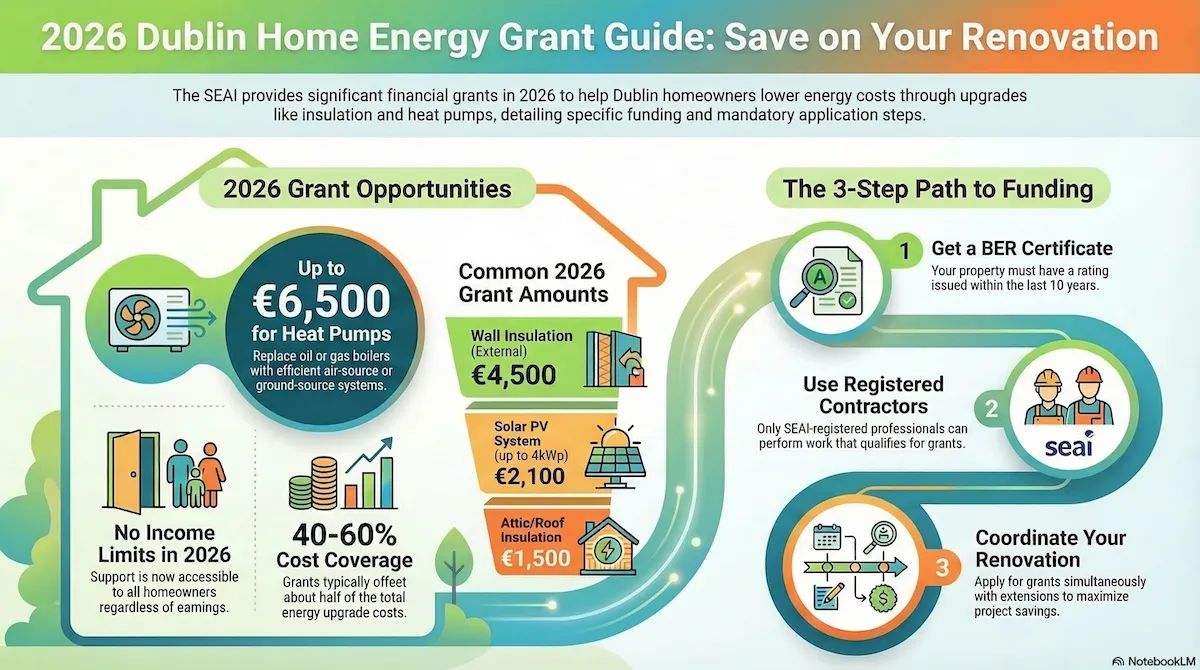
The Sustainable Energy Authority of Ireland (SEAI) offers home energy grants that may offset some upgrade costs. Check current schemes for extensions and heat pump installation grants.
Why BR Building Services Delivers Energy-Efficient Extensions
With 35+ years of experience building extensions across Dublin 16 and South Dublin, we understand energy performance isn't an afterthought—it's built into the design. We:
- Employ energy consultants to model performance during design, catching issues early
- Specify high-performance materials and products based on proven track records
- Use trained crews skilled in airtightness, thermal bridging reduction, and MVHR installation
- Coordinate with qualified electricians and heating engineers for heat pump and MVHR integration
- Conduct blower door testing and thermal imaging for verification
- Provide transparent quotes showing energy upgrade costs versus standard build
Our clients consistently report that energy-efficient extensions deliver on promised performance, with heating bills reduced by 30-40% in winter, and improved comfort year-round.
Next Steps: From Design to Completion
Building an energy-efficient extension requires collaboration between architect, energy consultant, structural engineer, and experienced builder. The process includes:
- Concept design—orientation, passive solar strategy, rough insulation specifications
- Energy modelling—detailed DEAP assessment to confirm Part L compliance trajectory
- Detailed design—junction details, MVHR ducting, thermal bridge analysis
- Procurement—specification of materials, testing protocol agreements
- Installation—quality supervision of insulation, airtightness, ventilation systems
- Verification—blower door test, thermal imaging, final energy assessment
Don't rush this process. A well-designed energy-efficient extension costs marginally more upfront but delivers decades of comfort, lower energy bills, and higher resale value.