Open-Plan Kitchen Living: Transform Your Dublin Home
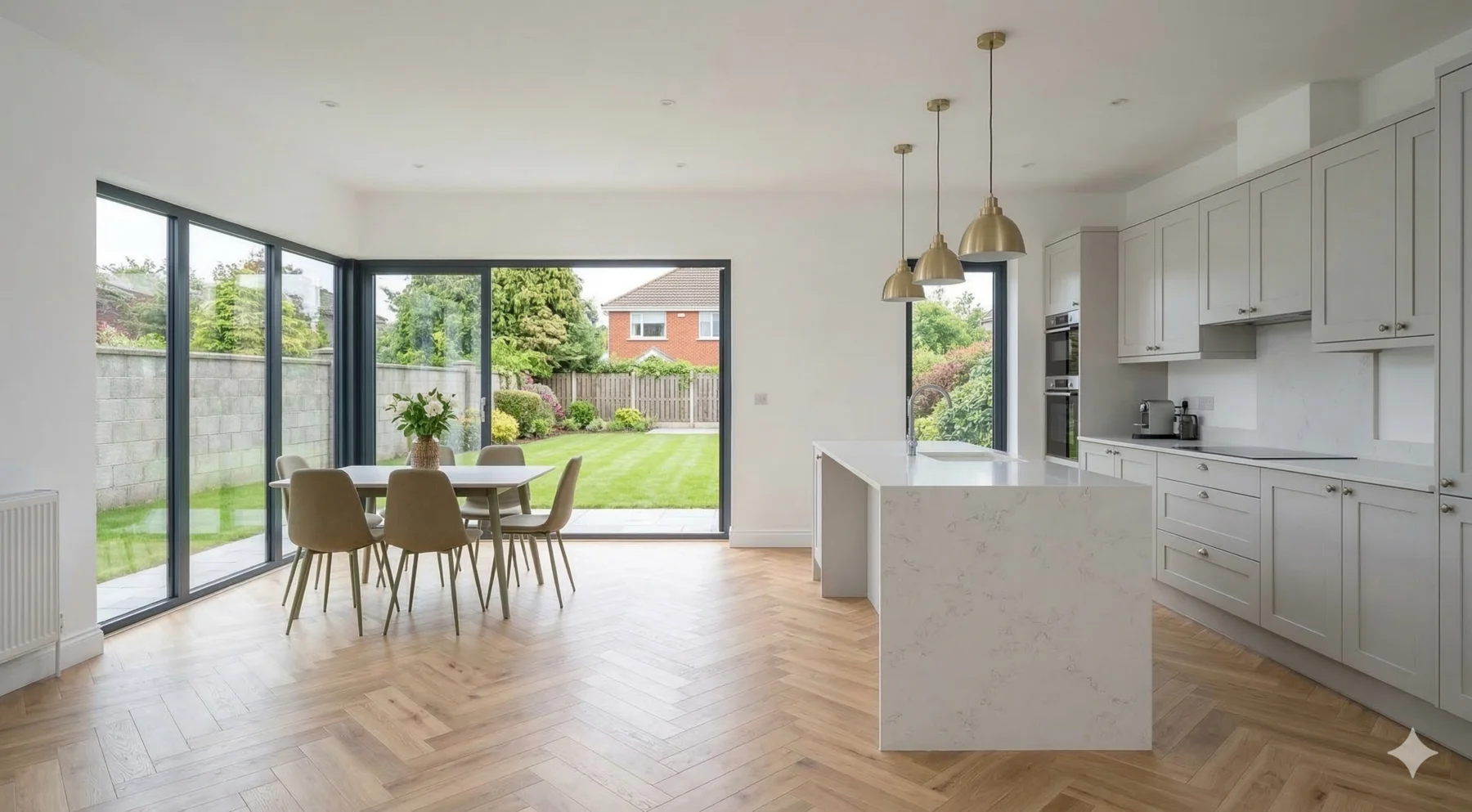
The open plan kitchen living concept has transformed how modern Dublin families use their homes. Breaking down the walls between separate kitchen, dining, and living spaces creates a fluid, sociable environment perfect for contemporary living. With over 35 years of building experience in Ballinteer and South Dublin, BR Building Services has helped hundreds of homeowners create beautiful open-plan spaces. This comprehensive guide covers everything you need to know about transforming your Dublin home.
Whether you're planning a modest kitchen diner or a dramatic wraparound open-plan transformation, understanding the structural, practical, and cost considerations is essential for success.
Load-Bearing vs Partition Walls: The Critical First Step
Not all internal walls are created equal. Identifying whether a wall is load-bearing or a non-structural partition is the foundation of any open-plan project. Load-bearing walls support the weight of the roof, floors above, or other structural elements. Removing a load-bearing wall requires structural support—typically a steel beam (RSJ or I-beam). Partition walls are non-structural and can be removed relatively straightforwardly, but they still require careful planning regarding utilities.
A structural engineer's assessment costs €800-€1,500 but is non-negotiable. They'll determine what support you need, the beam size required, and bearing points. In Dublin homes, many internal walls between kitchens and dining rooms are partition walls, but walls supporting upper floors or roof loads are load-bearing and demand professional design.
Steel Beam (RSJ) Installation for Open-Plan Spaces
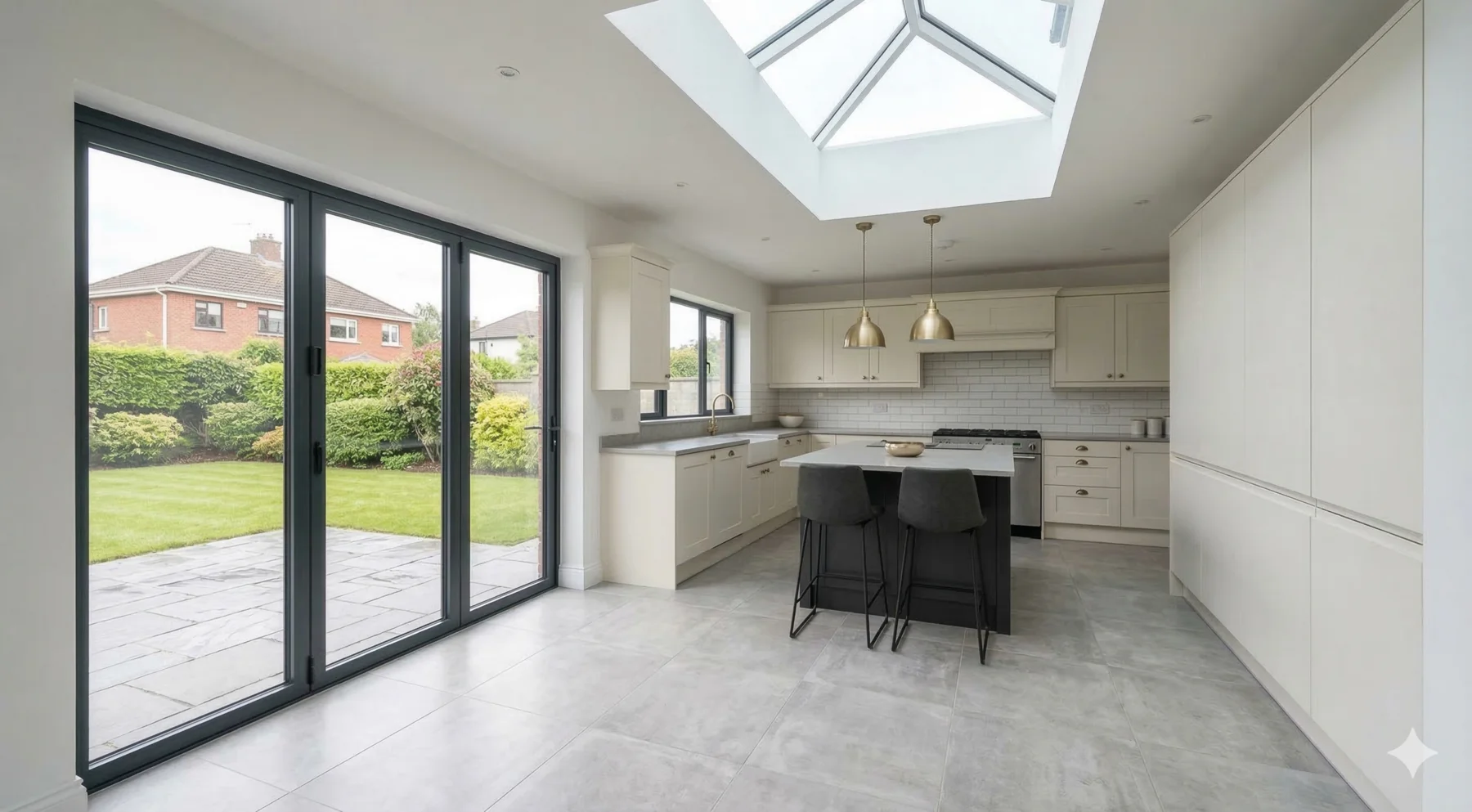
When a load-bearing wall must be removed, a steel beam redistributes its load to bearing points (columns or existing walls). RSJs (Rolled Steel Joists) are standard in Dublin construction. The beam size and specification depend on the span, load above, and bearing conditions. A typical 6-metre span kitchen conversion might require a 254mm x 254mm UB27 beam, costing €3,000-€6,000 for materials and supply.
Installation is labour-intensive and requires temporary propping during work. Steel must be bolted to bearing points, often requiring new brickwork pilasters or concrete foundations. Budget €8,000-€15,000 for professional steelwork installation, including temporary support, cutting out old wall, positioning, bolting, and making good around the beam. Building Control requires inspection and sign-off before the beam is covered.
A common concern is beam visibility. Beams can be boxed in with plasterboard and skirting, becoming largely invisible, or exposed as a design feature. Contemporary kitchens often celebrate the structural element with matching paint or decorative finishes.
Kitchen Island Designs for Open-Plan Living
The kitchen island is the heart of open-plan spaces, providing practical work surface, casual seating, and a visual anchor. Islands come in countless styles: central work islands with hobs, breakfast bar islands with seating for 3-4, or hybrid designs combining preparation space with dining. In Dublin homes, islands typically measure 1.2m x 2.4m to 1.5m x 3m, providing adequate workspace without dominating the room.
Position your island to create natural flow between kitchen prep area and dining/living zones. Ensure at least 1.2m of clear space around the island for safe, comfortable movement. Kitchen design specialists can optimize layouts; many Dublin builders work with kitchen designers to ensure islands integrate functionality with the overall aesthetic.
Zoning Open-Plan Spaces Effectively
Open-plan doesn't mean formless. Successful spaces use subtle design elements to define zones. Level changes (a kitchen on a slightly different level), flooring transitions, lighting intensity, and furniture placement all create distinct areas without closing them off. Partial height walls or screens, kitchen islands, and strategic furniture arrangement delineate cooking, dining, and relaxation zones while maintaining visual openness and light flow.
Design Tip
Use different lighting layers for each zone—brighter, focused light above the kitchen island for task work, warmer ambient lighting over dining area, and layered living room lighting. This functional approach also makes spaces feel larger and more intentional.
Flooring Choices for Open-Plan Areas
Open-plan spaces benefit from continuous flooring that visually connects areas. Discontinuous flooring (kitchen tiles, living room carpet, dining hardwood) fragments the space visually and practically. Best options for Dublin open-plan kitchens include: natural stone (limestone, porcelain), engineered hardwood, or concrete polishing. These materials handle kitchen spills, are easy to maintain, and create seamless flow. Underfloor heating is increasingly popular in Dublin, providing comfort without visible radiators that break sightlines.
Expect to pay €80-€150 per m² for quality porcelain, €100-€200 for engineered hardwood, and €120-€180 for natural stone. Underfloor heating adds €50-€80 per m² installed. The investment pays dividends in comfort and aesthetics.
Lighting Zones in Open-Plan Kitchens
Lighting architecture is crucial in open-plan. Multiple switched circuits allow you to adjust light levels for different activities. Kitchen preparation needs bright, focused light (often pendant lights or downlighters above the island). Dining requires softer, ambient light at eye level when seated. Living areas benefit from dimmable layered lighting—overhead, wall lights, and accent lighting creating flexibility. Modern open-plan kitchens often feature 4-6 separate lighting circuits with individual dimming control.
Avoid single central ceiling lights that look clinical and waste energy illuminating empty space. Instead, distribute fixtures across zones. LED technology allows efficient, warm lighting without heat output affecting kitchen or living comfort.
Ventilation and Extraction for Open Kitchens
Cooking aromas and steam no longer exhaust neatly out of a closed kitchen—they're now part of your open-plan environment. Professional extraction is essential. Powerful island extractor hoods (range hoods) are standard, requiring ducting out through roof or external wall. Expect €2,000-€5,000 for a quality extraction system with installation. Undersized extraction leaves cooking smells lingering for hours.
Wall-mounted extraction works if the kitchen is positioned along an exterior wall. Island hoods offer superior coverage for central kitchens. Some Dublin homes use combination approaches: a primary island extractor supplemented by wall-mounted or recessed units. Building Regulations require minimum air change rates; a qualified kitchen installer will specify appropriate capacity.
Heating Open-Plan Areas
Large open-plan spaces can be challenging to heat uniformly with traditional radiator placement. Many Dublin homeowners integrate underfloor heating with modest radiators in living zones, or opt for modern heat pump systems that distribute warm air evenly. Open-plan kitchens adjacent to living spaces mean radiator positioning must consider furniture placement and comfort rather than just filling available wall space.
Insulation becomes critical in open-plan homes. Larger glass areas (common in modern open kitchens with external doors to gardens) require high-performance double or triple glazing to prevent cold spots and maintain efficiency. Heat loss through external walls and windows is the enemy of comfortable open-plan living.
Combining Open-Plan with Rear Extensions
Many Dublin homeowners maximize impact by combining internal wall removal with rear extensions. A modest 20 m² rear extension plus open-plan conversion of existing space can create dramatic, light-filled living areas. The extension provides new kitchen or dining space, with walls removed from the original house to integrate everything seamlessly. This approach is more expensive but delivers superior results: more usable space, better light, and higher property value return.
Practical Considerations: The Realities of Open-Plan Living
Open-plan is beautiful but requires honest assessment of your household. Cooking in an open kitchen produces smells that linger throughout connected spaces—excellent extraction helps but doesn't eliminate this entirely. Noise from kitchen activity carries into living and dining areas. Sound-absorbent finishes (soft furnishings, carpeted dining areas) help manage this. Storage planning is critical; open kitchens with clutter visible from living areas feel cramped. Island storage, built-in pantries, and hidden storage solutions are essential for visual success.
Temperature control can be uneven if zoning isn't carefully planned. Cooking heat and ambient living room temperatures may conflict. Flexible heating and cooling strategies (zone control, smart thermostats) address this.
Costs of Wall Removal and Open-Plan Conversion
| Work Type | Scope | Cost Range |
|---|---|---|
| Partition Wall Removal | Non-load-bearing wall, minor services relocation | €3,000 - €8,000 |
| Load-Bearing Wall & Steel Beam | RSJ installation, bearing points, propping, building control | €12,000 - €20,000 |
| Kitchen Extraction System | Hood, ducting, external termination | €2,000 - €5,000 |
| Continuous Flooring (50 m²) | Porcelain, limestone, or engineered hardwood | €4,000 - €10,000 |
| Lighting & Electrical Rewire | Multiple zones, dedicated circuits, dimming | €3,000 - €7,000 |
| Heating Integration (Underfloor) | Installation across open area | €2,500 - €6,000 |
| Finishes & Plasterwork | Boarding, plastering, painting, beam boxing | €5,000 - €12,000 |
A typical open-plan kitchen diner conversion in Dublin (removing one partition wall, no structural support, 30 m² kitchen/dining area) totals €18,000-€35,000. A more ambitious project (load-bearing wall removal with steel beam, rear extension integration, premium finishes) reaches €50,000-€100,000+. Much depends on existing condition, services complexity, and specification level.
Why Choose BR Building Services?
Open-plan conversions demand coordinated expertise: structural understanding, building regulation knowledge, skilled tradespeople, and design sensibility. BR Building Services brings 35+ years managing complex kitchen and extension projects across Dublin. We coordinate structural engineers, manage building control, source materials efficiently, and ensure your vision becomes reality—on time and on budget. Our attention to practical details—extraction, heating, zoning, storage—ensures your open-plan kitchen doesn't just look stunning; it functions beautifully for years to come.