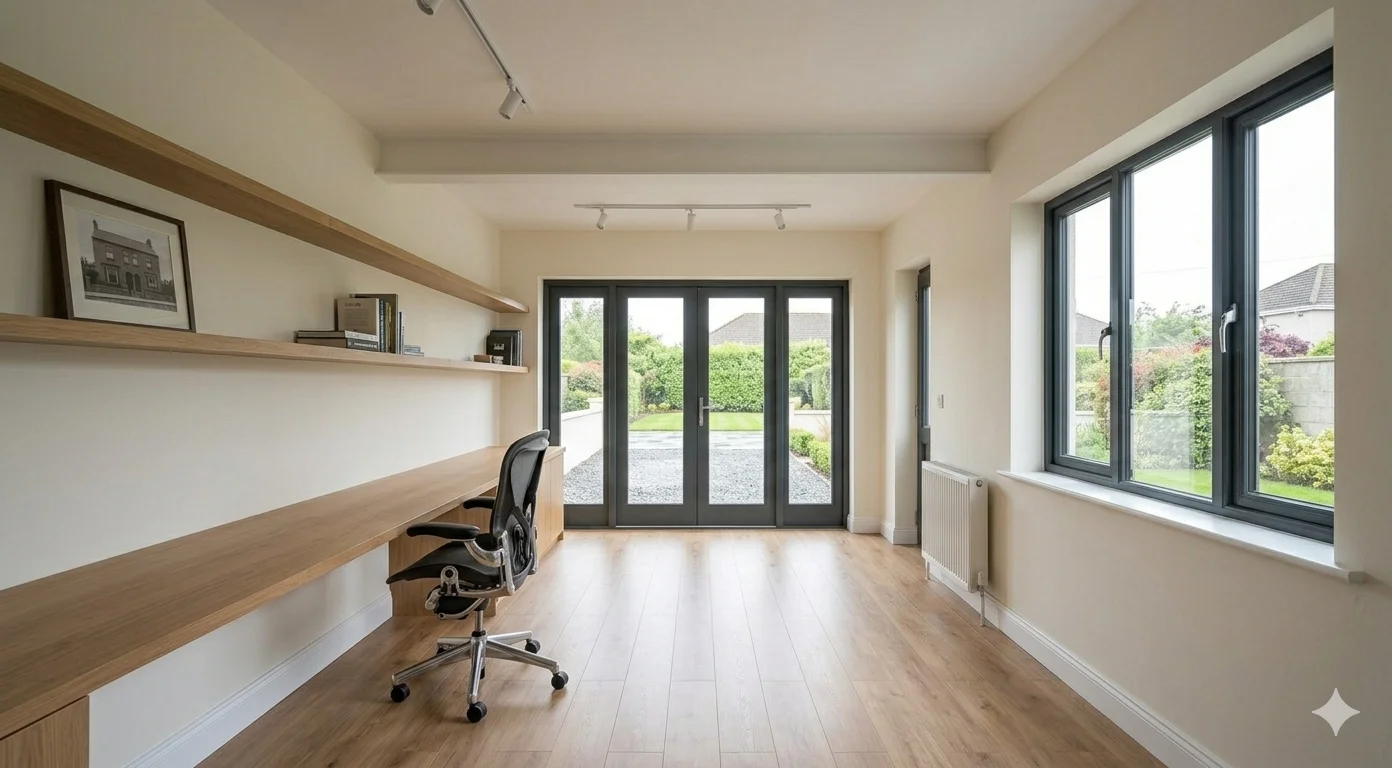
Garage to Home Office Conversion in Dublin: The Complete Guide
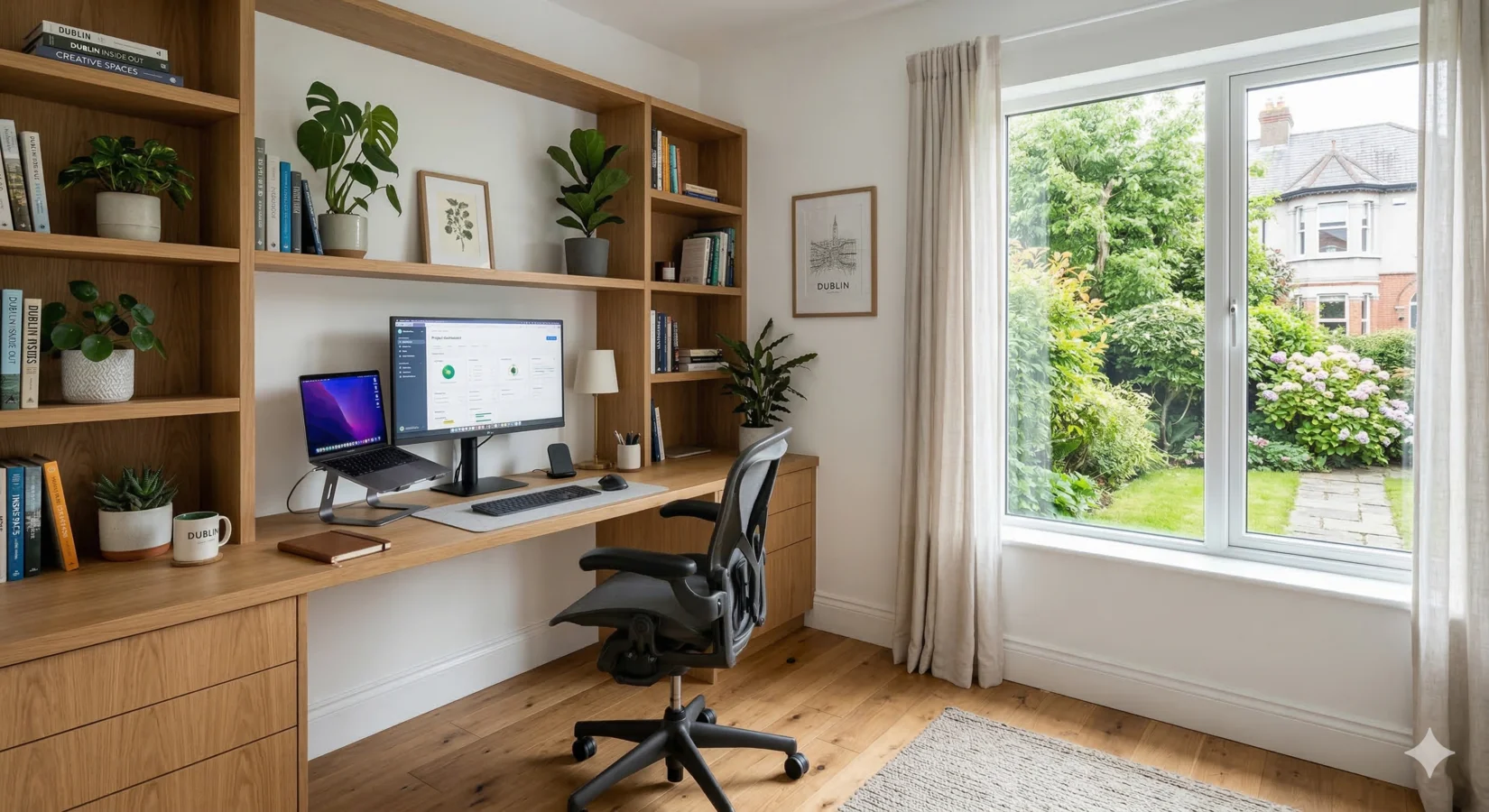
Converting your garage into a home office has become one of the smartest value-for-money building projects in Dublin. Unlike building from scratch, you're working with existing foundations, walls, and a roof—already in place. The real question isn't whether it's possible; it's how to do it right, cost-effectively, and within Dublin's building regulations. With over 35 years of building experience in Ballinteer and South Dublin, BR Building Services has completed dozens of successful garage conversions, and we're sharing the complete blueprint to help you plan your project with confidence.
Why Garage Conversions Offer Exceptional Value
A garage conversion is fundamentally cheaper than building an extension from scratch because the structural envelope is already there. You're not excavating foundations, building from ground up, or constructing a roof. This alone saves 20-30% compared to equivalent new build space. That's the first reason homeowners across Dublin choose garage conversions—they deliver professional workspace at a fraction of extension costs.
Beyond cost, a converted garage offers privacy and separation from your home. You can close a door, create acoustically isolated space, and establish genuine work boundaries. For professionals who conduct video calls, client meetings, or need uninterrupted focus time, this separation is invaluable. A home office isn't just about square metres; it's about creating a professional environment clients take seriously.
Additionally, converting existing space rarely affects your property's external appearance or requires planning permission in most cases. Your neighbours won't see major changes. Your property value typically increases—studies suggest home offices add 5-10% to Dublin property values when professionally finished.
Understanding Exempt Development Rules for Garage Conversions
This is critical: most garage conversions in Dublin qualify as "exempt development" under Part 4 of the Planning and Development Regulations 2001. If yours qualifies, you avoid planning applications entirely. This saves €500-€1,500 in application fees and 8-12 weeks waiting for approval.
When Your Conversion is Exempt Development
A garage conversion qualifies for exemption if it meets all of these conditions:
- The conversion is internal only (no external changes to windows, doors, or building footprint)
- No part of the building would be within 3 metres of a public road boundary after conversion
- Total floor area of the converted building does not exceed 40 m² (measured on its longest side)
- The original garage door is not replaced with windows facing a public road
- No external material changes to the building's appearance
- The work complies with Building Regulations
Most Dublin garages fall within 40 m², are set back from roads, and can be converted internally without external changes. That's why many qualify automatically.
When Planning Permission is Required
If your garage faces a public road and you want to replace the garage door with a window or wall, you'll likely need planning permission. Similarly, if your garage is unusually large (over 40 m²) or you're making external material changes visible from the road, planning becomes necessary.
Never assume your conversion is exempt. Always confirm with your local authority or an architect before starting. The cost of rectifying an unpermitted build is far higher than getting permission upfront.
The Core Requirements for Your Garage Conversion
Insulation: Floor, Walls, and Ceiling
A cold garage is unusable as an office. Proper insulation is non-negotiable. The existing garage concrete slab is typically uninsulated. You'll need:
- Floor Insulation: Lay 100mm rigid foam insulation (PIR or XPS) over the concrete, then screed with 50mm concrete and insulation layer beneath for thermal break. Cost: €1,500-€2,500
- Wall Insulation: If walls are single-skin blockwork, add internal insulation using 100mm mineral wool or rigid foam with plasterboard overlay. If cavity walls exist, you can blow cavity insulation. Cost: €2,000-€4,000
- Ceiling Insulation: Many garages have just a basic roof structure. Install 150-200mm mineral wool insulation between joists and add plasterboard. Cost: €1,500-€2,500
Total insulation package: €5,000-€9,000. This transforms thermal comfort and energy efficiency—essential for a workspace where you'll spend 8 hours daily.
Damp-Proofing the Concrete Slab
Garages are vulnerable to rising damp. The concrete slab lacks a damp-proof membrane (DPM). Before insulating and finishing, install a chemical DPM or new physical membrane over the existing slab. This prevents moisture rising into your insulation and flooring, which causes mould and degradation.
Cost: €800-€1,500 for a typical 20 m² garage. Don't skip this—damp damage to a new office is costly and unhealthy.
Replacing the Garage Door
The garage door opening must be addressed. You have three options:
- Infill with Blockwork and Plaster: Permanent, cost-effective (€2,000-€3,500), and creates a solid wall. This is typical for exempt conversions.
- Install a Window: Allows natural light, adds visual appeal, but may require planning permission if visible from a public road. Cost: €2,500-€4,500 for a quality window.
- Install a Door: If you want a separate external entrance (valuable for client meetings or separating work from home), install a external door frame. Cost: €3,000-€5,000, and likely requires planning permission.
Most exempt conversions use blockwork infill, which is the safest regulatory choice and offers excellent value.
Heating: Extending Your System
A cold office is unproductive. You need heating. Two practical options:
- Radiator Extension: Extend your home's central heating system into the garage. Add a radiator, pipe runs, and thermostatic valve. Costs €1,500-€2,500 if your boiler has spare capacity. This is most efficient if your boiler is undersized or struggling already—a boiler upgrade adds €3,500-€6,000.
- Electric Heating: Install an electric heater (fan convector or infrared). Costs €500-€1,500 for the unit and installation. Operating costs are higher than central heating, but no plumbing required. Good for spaces under 20 m².
- Heat Pump: An air-source heat pump is increasingly popular. Costs €6,000-€10,000 installed but offers excellent efficiency and future-proofs your home energy strategy.
Most Dublin homeowners extend central heating where possible. If your system is old or undersized, this is an opportunity to upgrade.
Electrical Installation and Power
A home office needs reliable power. Plan for:
- Dedicated Circuit: A separate circuit from your home's main board, protected by an RCD. Essential for safety when running computers, monitors, and equipment. Cost: €1,000-€1,500
- Sockets and Outlets: Install 4-6 double sockets strategically for desk, monitors, charging, and future flexibility. Cost: €400-€800
- Lighting: Recessed ceiling lights or a ceiling pendant, plus a desk lamp. LED lighting is efficient and reduces heat in a small space. Cost: €600-€1,200
- Broadband Cabling: Run data cabling from your home router, or plan for mesh WiFi coverage. Cost: €300-€800
Total electrical package: €2,300-€4,300. Don't underestimate power needs—a modern office demands reliable, abundant circuits.
Ventilation and Air Quality
A sealed office without fresh air becomes stuffy and unhealthy. Install mechanical ventilation with heat recovery (MVHR) or a simple extract fan linked to your home's ventilation strategy. Cost: €1,500-€3,000 for basic ducting and extract.
If budget is tight, operable windows or a passive external air supply (a simple duct with grille) improves air quality significantly without complex systems.
Natural Light and Windows
Working in an artificially lit box all day is psychologically draining. Even a small high-level window or a new window where the garage door was transforms the space. Natural light boosts mood, productivity, and perceived space size.
If the existing garage wall faces away from the road or is screened, a new window is uncontroversial and exempt-friendly. Cost: €2,000-€4,000 for a quality window installed.
Flooring Options for Your Office

The concrete slab provides your base. Finishing options include:
- Screed and Paint: Smooth screed, sealed and painted. Cost-effective (€800-€1,500), easy to clean, but can feel cold and harsh. Good for budget conversions.
- Vinyl or Laminate: Warm, comfortable, quieter underfoot. Cost: €2,000-€3,500 installed. Practical and professional.
- Polished Concrete: Aesthetically pleasing, durable, modern. Cost: €2,500-€4,000. Popular in contemporary offices.
- Engineered Wood: Premium feel, warm aesthetic, though costlier. Cost: €4,000-€6,500. Excellent for client-facing spaces.
Most Dublin homeowners choose vinyl or laminate—the balance of cost, comfort, durability, and visual appeal makes them the practical choice.
Making It a Professional Workspace
Soundproofing for Focus and Client Calls
A garage walls are thin. Sound transmits easily to your home and vice versa. If you conduct video calls or need quiet focus time, soundproofing is essential. Options include:
- Acoustic insulation in walls during initial build (adds ~€1,000-€2,000)
- Acoustic panels or wall treatments post-completion (€500-€1,500)
- Heavy curtains and soft furnishings absorb sound naturally
Plan soundproofing from the start—it's far cheaper to install during construction than retrofit later.
Separate Entrance: A Game-Changer
If your garage is adjacent to the front or side of your home, consider a separate external entrance. This creates psychological separation between work and home, and clients entering a dedicated entrance perceive professionalism differently than seeing "the garage." Cost: €2,500-€5,000 for a properly installed external door, porch, and approach.
Not essential for internal use, but transformative if you meet clients regularly.
Finishing and Aesthetics
Plasterboard, paint, good lighting, and storage transform a garage into a professional office. Budget an additional €2,000-€4,000 for high-quality finishes, paint, skirting, and minor joinery. Your office should feel like a proper room, not a converted garage.
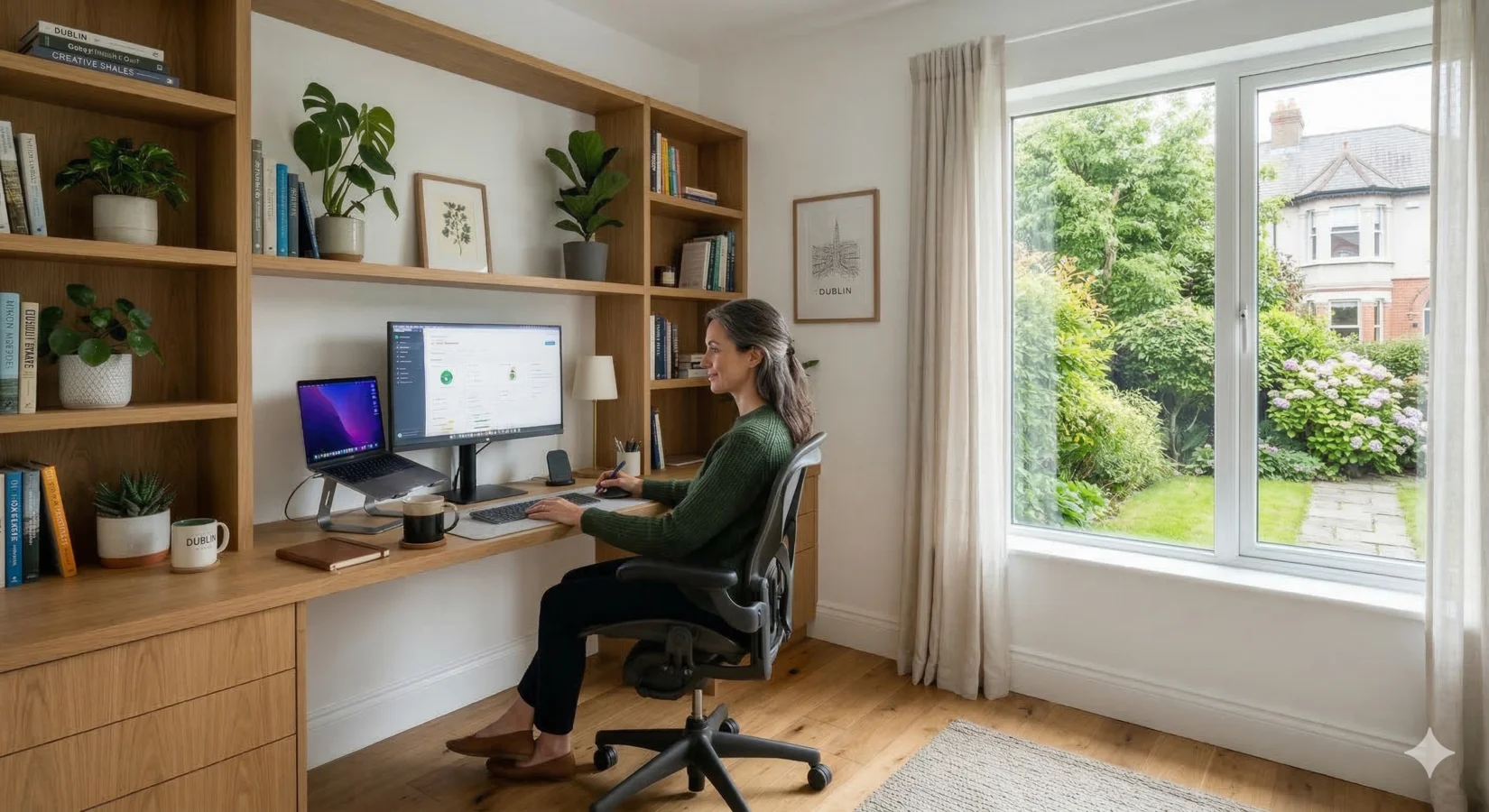
Typical Costs for a Garage Conversion in Dublin
| Cost Category | Budget Range (€) | Notes |
|---|---|---|
| Insulation (floor, walls, ceiling) | €5,000 - €9,000 | Depends on existing conditions and specification |
| Damp-Proofing | €800 - €1,500 | Chemical DPM or membrane installation |
| Garage Door Infill/Replacement | €2,000 - €5,000 | Blockwork infill, window, or door frame |
| Heating (radiator extension or heat pump) | €1,500 - €10,000 | Central heating extension or standalone heat pump |
| Electrical Installation | €2,300 - €4,300 | Circuits, sockets, lighting, broadband |
| Ventilation | €1,500 - €3,000 | Mechanical extract or MVHR system |
| Flooring | €2,000 - €4,000 | Vinyl, laminate, or polished concrete |
| Finishing & Decorating | €2,000 - €4,000 | Plasterboard, paint, skirting, storage |
| Total Project Cost | €15,000 - €30,000 | Typical 20-25 m² garage conversion |
Cost Insight
A €15,000-€30,000 garage conversion delivers professional workspace at €600-€1,200 per square metre. Compare this to a purpose-built extension at €1,800-€2,500/m², and the value becomes obvious. Labour typically represents 40-50% of costs, with materials the remainder.
Timeline: How Long Does a Garage Conversion Take?
A standard garage conversion takes 4-6 weeks from start to practical completion. Here's the typical sequence:
- Week 1-2: Damp-proofing, insulation installation, structural prep (infill opening if needed)
- Week 2-3: Electrical first fix (circuits, conduits, sockets rough-in), heating system preparation
- Week 3-4: Plasterboard and finishing, flooring preparation, ventilation ducting
- Week 4-5: Painting, flooring installation, lighting and heating second fix, final electrical connections
- Week 5-6: Final inspections, snagging, handover
The timeline assumes good access, no hidden structural issues, and availability of trades. Bad weather, supply delays, or scope changes can extend this to 8-10 weeks. Planning ahead and booking trades early keeps projects on track.
Building Control and Compliance
Even if your conversion is exempt from planning, Building Control approval is always required. You must notify the local authority and have inspections at key stages (insulation completion, first fix, before handover). Building Control ensures your work meets thermal, electrical, structural, and safety standards.
Building Control registration costs €300-€600 depending on your local authority. This is non-negotiable and protects both you and future buyers.
Why BR Building Services is Your Partner for Success
Converting a garage correctly requires coordinating multiple trades, understanding exemption rules, managing Building Control, and ensuring thermal and structural standards are met. One mistake—poorly sealed insulation, inadequate ventilation, or electrical shortcuts—compromises the entire space.
Over 35 years, we've completed dozens of garage conversions across Dublin 16, Ballinteer, and South Dublin. We know:
- Which local authorities have strict exemption interpretations
- How to coordinate trades efficiently to meet timelines
- How to insulate effectively without wasting budget
- Building Control expectations in your area
- Cost-effective solutions that don't compromise quality
Our clients consistently report professional workspace delivered on time and within budget—exactly what you need for a successful conversion.
Getting Started: Your Next Steps
The first step is a detailed site survey to assess your garage's condition, confirm exemption eligibility, and identify any hidden challenges (structural issues, damp, undersized services). A professional survey costs €200-€400 and provides the clarity needed for accurate quoting and planning.
From there, we'll prepare a detailed specification and quote, coordinate necessary approvals, and guide you through the entire build. We handle the complexity; you get a finished professional office that transforms your working life.